Ask any engineer what they want from a designer and the answer is usually: clear specs, realistic components, and context for why decisions were made. Ask any designer what they find frustrating about handoff and the answer is: components built differently than designed, decisions made without context, and specs ignored.
Both are correct. Handoff problems are systemic, not individual. They are the result of process gaps, not people gaps.
Why handoff keeps breaking
The fundamental problem is that static design files are a poor medium for communicating intent. A Figma frame shows what something should look like at one moment in time. It does not show how it should behave, what should happen at different breakpoints, how it should animate, or what the fallbacks are for edge cases.
Engineers fill these gaps with judgment calls. Sometimes those calls match the designer's intent. Often they do not. The closer the collaboration, the fewer the gaps.
What high-functioning teams do differently
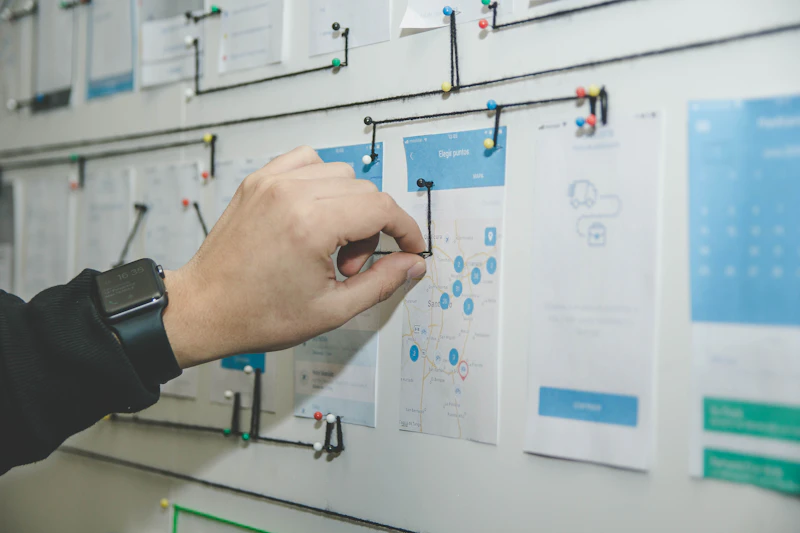
They design in collaboration, not in sequence. Rather than a designer completing a design and then handing it to an engineer, the two work together throughout. The engineer raises implementation questions during the design phase. The designer understands technical constraints before they finalise the design.
They annotate intent, not just appearance. A note that says 'this should animate in from the right when triggered by the side navigation' is worth a hundred pixel measurements. Document the why alongside the what.
The role of shared language
Most handoff problems are communication problems. Teams that have solved handoff have usually done it by creating shared language — a design system that both sides use, a component naming convention both sides follow, a definition of done that both sides sign off on.
The goal is not a perfect handoff document. The goal is a team where handoff is barely necessary — because the designer and engineer have been thinking through the same problems from the start.
Design–engineering handoff keeps breaking because static specs try to stand in for shared judgment.
Figma frames capture a single moment in time: how something looks, not how it behaves, adapts, or fails. When reality diverges from the frame — new breakpoints, edge cases, competing interaction priorities — engineers are forced to make judgment calls without the designer’s intent. The more distance there is between disciplines (different sprints, different tools, different rituals), the more those judgment calls drift.
No amount of annotation can fully encode judgment. A handoff doc can say what and how many pixels; it cannot reliably say why in a way that scales to every unanticipated case. Teams that respond by adding more layers of documentation and process are optimizing the wrong thing. The bottleneck is not the volume of specs; it is the lack of shared mental models.
High-functioning teams solve this by collapsing the distance:
- Design and engineering work in parallel, not sequence. Engineers are present during exploration; designers understand constraints before finalizing. This front-loads trade-off discussions.
- They annotate intent, not just appearance. Notes explain why an animation exists, what hierarchy it reinforces, and what should be preserved when compromises are needed.
- They review builds together, early and often. Lightweight, recurring check-ins catch drift when it’s cheap to fix.
- They invest in shared language. A design system, consistent component names, and a mutual definition of done (including responsiveness and accessibility) remove ambiguity.
The sustainable fix is proximity: shared goals, shared vocabulary, and shared problem-solving. The ideal state is not a perfect handoff artifact, but a way of working where handoff is almost invisible — because designers and engineers have been making the important decisions together from the start.
Design–engineering handoff keeps failing because teams try to replace shared judgment with static specs.
Static frames (like Figma screens) freeze a single moment in time. They show how an interface looks, but not how it behaves, adapts, or fails under real conditions: different breakpoints, edge cases, loading states, or interaction conflicts. When those situations arise, engineers must make judgment calls without the designer’s intent. The more separation there is in process, tools, and timing, the more those calls drift from what was intended.
Adding more redlines, tickets, and documentation doesn’t fix this. Specs can encode what and how many pixels; they cannot fully encode why in a way that scales to every new scenario. Over-optimising the handoff artifact treats a communication problem as a documentation problem.
High-functioning teams solve this by collapsing distance and building shared mental models:
- Work in parallel, not in sequence. Designers and engineers collaborate from exploration through implementation. Trade-offs are discussed while ideas are still cheap to change.
- Annotate intent, not just appearance. Documentation focuses on purpose and priorities: why an animation exists, what hierarchy matters most, and what should stay true when compromises are required.
- Review early and often together. Short, recurring build reviews catch divergence while it’s still easy to correct.
- Invest in shared language and systems. A common design system, consistent component naming, and a mutual definition of done (including responsiveness, accessibility, and performance) reduce ambiguity and re-interpretation.
The real solution is proximity: shared goals, shared vocabulary, and shared problem-solving. The ideal state isn’t a perfectly detailed handoff package; it’s a way of working where handoff becomes almost invisible because designers and engineers have been making the important decisions together from the start.