I've been a product designer for over eighteen years. I know what a project week looks like: the slow accumulation of sticky notes, the affinity mapping sessions that stretch into early evening, the wireframes that feel rushed on a Friday because you've spent Monday through Thursday just trying to understand what you're actually solving. That pace wasn't laziness. It was the work. But something shifted when I started integrating AI tools seriously into my process — not as a novelty, but as a genuine collaborator. The week didn't get shorter. It got deeper.
What a Project Week Used to Look Like
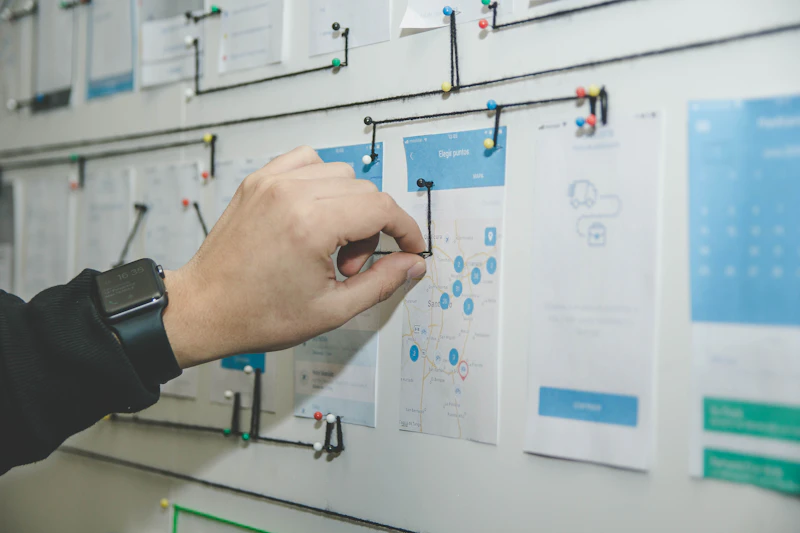
On a typical discovery-to-prototype sprint, the breakdown looked roughly like this: Monday was for brief alignment and stakeholder interviews — getting into the room, understanding competing agendas, figuring out which version of the problem the business had actually agreed to solve. Tuesday was synthesis. If I was lucky and the session went well on Monday, I'd be affinity mapping by Tuesday afternoon. More often, Tuesday was still catching up on what Monday had produced.
Wednesday and Thursday were ideation and concept development. I'd generate directions, sketch, workshop with the team, discard half of it, refine the rest. By Thursday evening I'd have two or three concepts worth taking somewhere. Friday was wireframing — usually under pressure, usually not as thorough as I wanted, always with the nagging feeling that I was handing over something half-baked.
That was the rhythm. Synthesis alone — pulling insights from interview notes, organising them into themes, identifying what was signal versus noise — would reliably consume the better part of two days. Not because I was slow, but because that kind of cognitive work takes time to do honestly.
What That Same Week Looks Like Now
The Monday alignment session is still a Monday. You can't shortcut the human work of getting stakeholders in a room and surfacing what they actually want versus what they said they wanted. But by Monday evening, I'm feeding interview transcripts and meeting notes into Claude and asking it to identify the tensions, surface the assumptions that haven't been named, and reframe the brief as a design problem rather than a business request. What used to take Tuesday and half of Wednesday now takes a few hours.
By Tuesday morning I have synthesis. I spend that morning pressure-testing it — checking whether the AI's pattern-finding matches my read from being in the room — and then I move into ideation. With a clear problem statement and a structured set of constraints, concept generation moves faster. I use AI to push past my first instincts, to generate directions I wouldn't have considered, and to stress-test them before I invest time in visualising them.
Wireframes start Tuesday afternoon. By Wednesday I have something testable. That's not a slight exaggeration — that's what the workflow actually looks like now.
Where AI Genuinely Accelerates the Work
The biggest time savings are in synthesis and structured ideation. Feeding fifty pages of research notes into a language model and asking it to identify recurring friction points, conflicting mental models, and unmet needs is genuinely fast. Not perfect — I always review and challenge the output — but it compresses the mechanical part of analysis dramatically.
Ideation also benefits. I use AI to generate a wide range of concept directions from a set of constraints, which forces me to consider approaches I'd have dismissed instinctively. Some of them are bad. A handful are interesting. A few spark something that becomes the actual direction. The value isn't in the AI's ideas — it's in the volume and variety that breaks you out of your own patterns.
First-pass wireframe structure also moves faster. Describing a user flow and asking for a content hierarchy or interaction sequence as a starting point is quicker than starting from a blank canvas. It's scaffolding — I tear it apart and rebuild it, but it's faster than starting from nothing.
Where AI Still Doesn't Help
There are three things AI cannot do. The first is read a room. Knowing that a stakeholder's objection to your proposal is actually about something that happened in a meeting six months ago, not the proposal itself — that's human intelligence accumulated through presence and pattern recognition over years. AI doesn't have access to that, and no amount of prompt engineering will give it that.
The second is taste. AI can generate competent design directions. It cannot tell you which one is right for this product, this user, this moment in the market. That judgement is yours — and it comes from years of building up a model of what good looks like and why.
The third is knowing what question to ask next. In a research session, the follow-up that unlocks a genuine insight is usually the one that wasn't on the discussion guide. Knowing when to leave the script requires presence, empathy, and instinct. AI can help you prepare better questions. It cannot be in the conversation with you.
The project week hasn't shortened so much as it's changed shape. The time I used to spend on mechanical synthesis I now spend on sharper thinking about what the synthesis means. The time I used to spend on first-pass ideation I now spend on refining and testing the ideas that matter. The work is better, not just faster. That's what makes this a genuine shift, not just a productivity trick.