"We will add Arabic later" is one of the most expensive sentences in a Gulf web project. Not because translation is hard, but because right-to-left is a design decision that touches almost every layout choice made before it.
Treated as a language toggle, it produces a site that is technically bilingual and obviously an afterthought. Designed in from the start, it costs a fraction and reads as though the Arabic version was the point.
It is not mirroring
The common shortcut is to flip the layout horizontally and call it done. That breaks more than it fixes.
- Numbers do not flip. Prices, dates, phone numbers, account identifiers and measurements keep their left-to-right order inside a right-to-left sentence. A mirrored layout that also reverses figures produces documents nobody can read.
- Icons are not symmetrical in meaning. A "next" arrow should point the other way. A clock, a logo or a photograph of a person should not.
- Charts and progress indicators have a direction that carries meaning. Reversing them can invert what they appear to say.
- Mixed-direction text is normal, not an edge case. An Arabic sentence containing an English brand name or a Latin-script model number needs to handle both within one line.
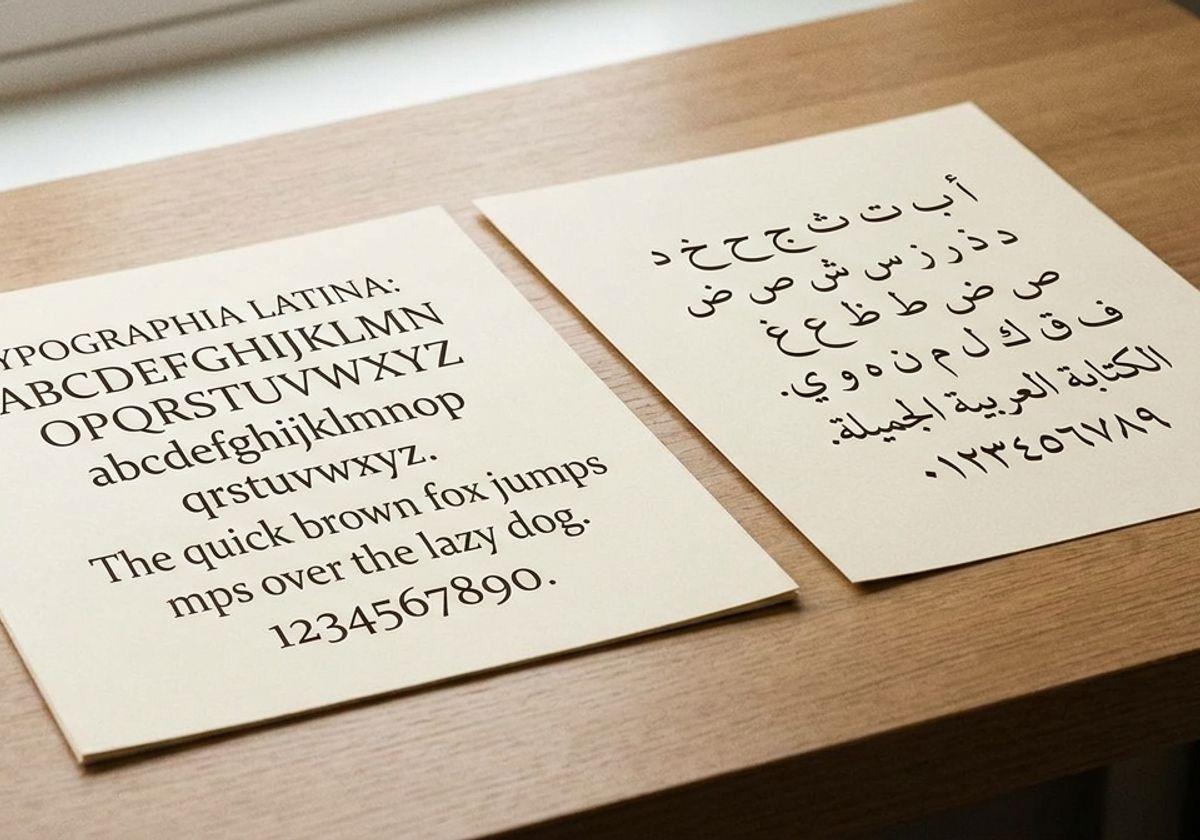
Typography is the part most teams underestimate
Arabic type behaves differently from Latin type in ways that affect layout rather than just aesthetics.
- Line height needs more room. Arabic script has taller ascenders and deeper descenders. A line height that looks generous in English can look cramped in Arabic, and the same component may need different spacing per language.
- Text length changes. Arabic translations are frequently shorter than English, sometimes considerably. A button sized to its English label can look oddly empty; a heading can lose its intended line break.
- Not every font has a real Arabic companion. Pairing a Latin typeface with an unrelated Arabic one is the most visible tell of a retrofitted site.
- Small sizes are less forgiving. Arabic loses legibility faster as it shrinks, which affects captions, labels and dense tables.
Decide the level of commitment early
Bilingual is not one decision. It is three, and they cost very differently.
- Interface only. Navigation, buttons, forms and system messages in Arabic, the content in English. Cheapest, and immediately obvious to an Arabic-speaking visitor.
- Interface and content. Everything written twice, forever. The design work is similar; the content operation is a permanent commitment that outlives the project.
- Two genuine experiences. Different emphasis, different campaigns, sometimes different structure, because the audiences are not the same people.
None is wrong. Choosing one after the templates are built is.
Where it bites hardest
Some product types suffer more than others. Anything with dense data — financial statements, property listings, tables, forms — is where a retrofitted Arabic version falls apart most visibly, because those layouts depend on alignment and direction that mirroring destroys.
We have designed dense-data products of exactly that kind in the region, including for the Federal Tax Authority and Qatar Development Bank, where a table that reads correctly is not a detail but the whole job.
What to do about it
If Arabic is likely within two years, design for it now. In practice that means choosing a type pairing that works in both scripts, building components that can flip without being redrawn, agreeing a numeral convention, and testing real Arabic content rather than placeholder text early enough for it to change something.
The additional cost of designing bilingual from the start is modest. The cost of retrofitting it is not, and it is paid in rework rather than in new design.
Our web design and real estate website design pages cover how we approach this, and the questions we get asked most covers scope. There is a related piece on choosing a platform, since how painful the Arabic content operation becomes depends heavily on that choice.
From here
Planning a build?
The decisions that cost the most are made before design starts: platform, languages, and what is explicitly out of scope.