There's a version of 'AI-assisted research' that worries me: skip the fieldwork, paste some secondary sources into a model, and call the output insights. I've seen it happen. I've seen the designs that result from it, and they have a particular quality — technically coherent but fundamentally disconnected from how real people experience real problems. Research is not a documentation exercise. It's a sense-making process that requires presence. What AI can do is make the sense-making faster and more rigorous, once you've done the work of being present.
What AI Genuinely Accelerates
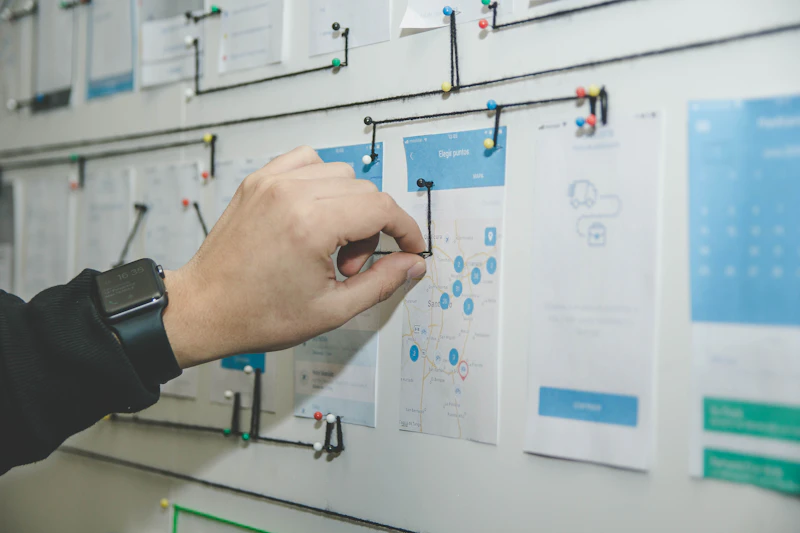
Synthesis is the clearest win. When I finish a round of user interviews, I have hours of transcripts, margin notes, and half-formed observations. Turning that into structured insights used to take days of careful reading, physical or digital affinity mapping, and iterative grouping. With AI, I can upload transcripts and ask for first-pass theme identification, frequency analysis of recurring pain points, and quotes that represent each theme. I still validate and reshape the output — AI synthesis reflects what the text says, not necessarily what was meant — but the scaffolding is there in hours rather than days.
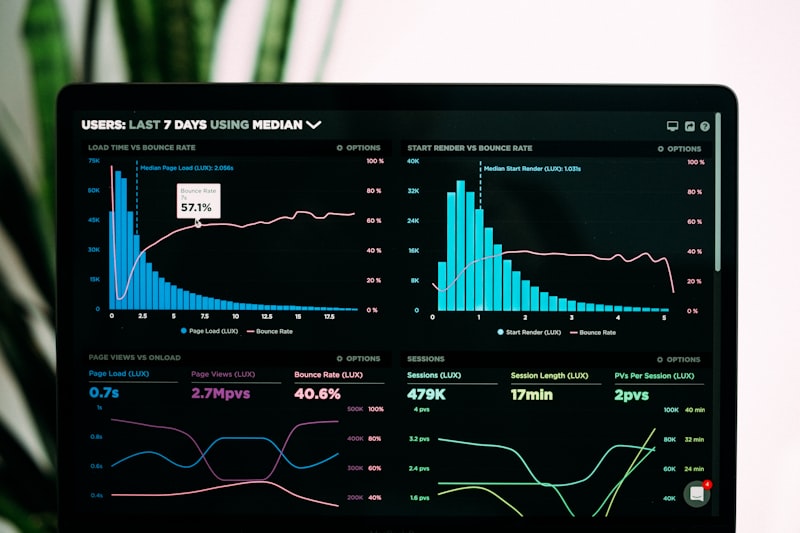
Pattern-finding across large data sets is another genuine acceleration. If you're analysing survey results alongside interview transcripts alongside support ticket logs, finding the threads that run across all three used to require significant coordination. AI can surface cross-source patterns faster than any human can manually.
Discussion guide generation and refinement also benefits. I use AI to stress-test discussion guides before fielding them — asking it to identify leading questions, questions that assume prior knowledge the participant might not have, and gaps in coverage given the research objectives. It's a useful pre-flight check that used to require a senior colleague to review.
What Still Requires Human Judgement
Participant rapport cannot be automated. Research quality depends almost entirely on whether participants trust you enough to tell you the truth — not the polished version of the truth they'd give to a survey, but the actual experience, including the parts they find embarrassing or that reflect badly on themselves or their organisation. That trust is built through physical presence, genuine curiosity, and the kind of listening that people can feel. No AI mediates that.
Reading body language is the other major category AI transcription misses entirely. The participant who says 'yes, that makes sense' while visibly hesitating, whose voice flattens when they describe a particular part of the flow — those signals don't exist in a transcript. They're the data that changes your interpretation of everything else they said. You can only collect that by being in the session.
Knowing what question to ask next is the hardest thing to explain and the most impossible to automate. It requires holding your research objectives in one hand while listening closely enough to spot the moment when an unexpected thread appears — and making the call, in real time, to follow it rather than stay on script. The question that unlocks the real insight is almost never the one you planned. That's why research needs a researcher.
Practical Workflow: Before, During, After
Before fieldwork, I use AI to review my discussion guide and pressure-test my hypotheses. If I think the problem is about information overload, I'll ask Claude to generate alternative hypotheses that could also explain the behaviours I'm seeing — this guards against confirmation bias in how I structure my questions.
During fieldwork, no AI. The session needs your full attention. I take notes by hand or use a note-taker — never anything that would make a participant feel their responses are being processed in real time.
After fieldwork, AI handles first-pass synthesis. I upload transcripts, share my raw notes, and ask for thematic grouping and quote selection. Then I spend time reviewing it with fresh eyes, adding the things only I know from being in the room — the hesitation, the energy shift, the comment made after the recording ended.
The Risk of Skipping the Hard Part
The danger is not that AI produces bad synthesis. It's that good-looking synthesis produced quickly will be mistaken for insight that was earned. If stakeholders see a polished research readout in forty-eight hours, they may not ask how it was produced. The pressure to use that efficiency to skip fieldwork rather than to deepen it is real, and teams need to resist it deliberately.
AI-assisted research done well produces better insights faster because the researcher has more time to think about what the data means. AI-assisted research done badly produces polished nonsense with the appearance of rigour. The distinction depends entirely on whether the fieldwork was real. That's the part nobody should be willing to compress.